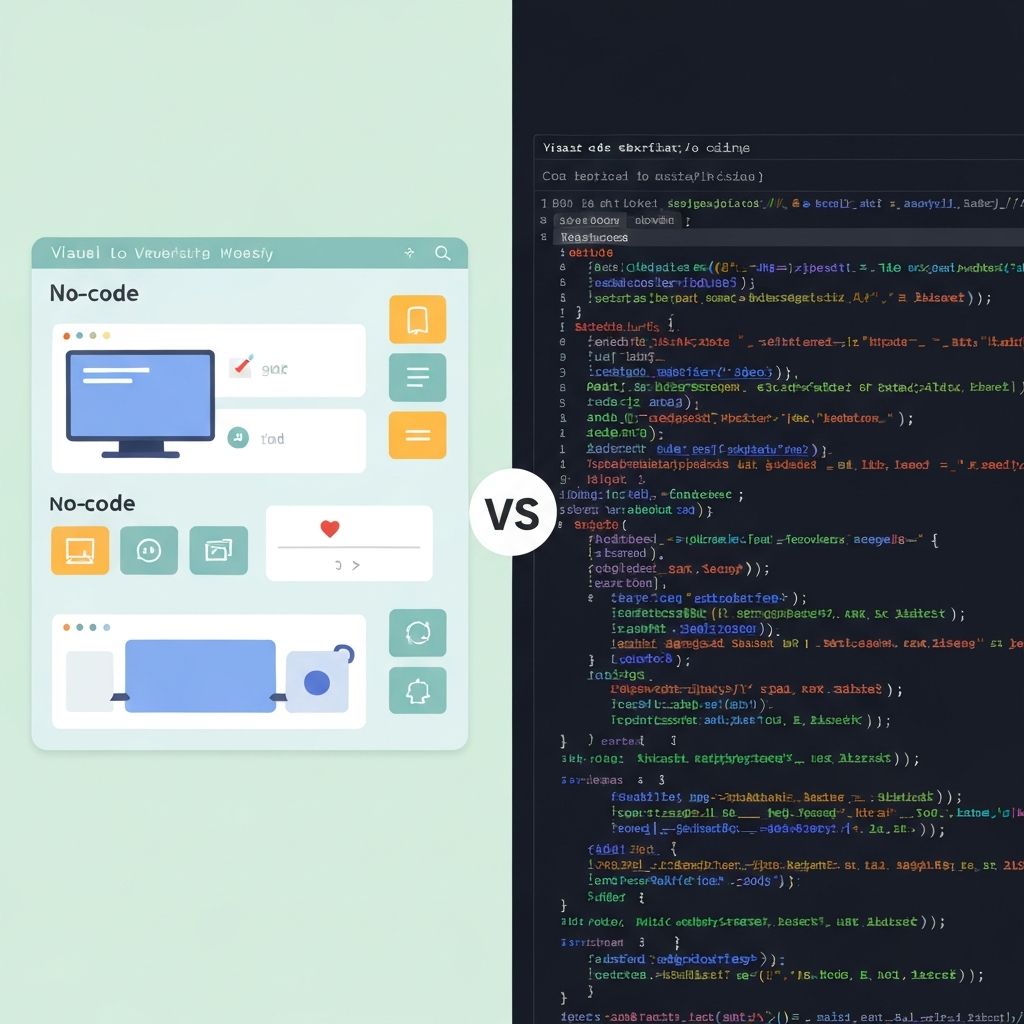
Bubble vs Traditional Development: A Complete Cost Analysis
The True Economics of No-Code vs Traditional Development
The decision between no-code platforms like Bubble.io and traditional software development represents one of the most consequential architectural choices facing founders, product managers, and technology leaders. This comprehensive analysis examines the total cost of ownership, development velocity, scalability constraints, and long-term strategic implications of each approach.
Drawing from data across 100+ projects, this guide provides quantitative frameworks for making informed technology selection decisions aligned with your business objectives, timeline constraints, and resource availability.
📊 Evaluating build options? Get a custom cost comparison for your specific project requirements.
Initial Development Cost Comparison
Traditional Full-Stack Development Economics
Custom software development requires comprehensive technical infrastructure and specialized expertise across multiple disciplines:
Team Composition and Costs (U.S. Market Rates):
- Frontend Developer: $80,000-$150,000/year ($40-$75/hour contract)
- Backend Developer: $90,000-$160,000/year ($45-$80/hour contract)
- DevOps Engineer: $100,000-$170,000/year ($50-$85/hour contract)
- UI/UX Designer: $70,000-$130,000/year ($35-$65/hour contract)
- Project Manager: $75,000-$140,000/year ($38-$70/hour contract)
Typical MVP Development Timeline: 4-9 months
Team Configuration: Minimum 2-3 developers + designer + PM
Total MVP Cost Range: $75,000-$250,000+
Bubble.io Development Economics
No-code development consolidates multiple specializations into unified expertise:
Resource Requirements:
- Bubble Developer: $50-$100/hour (replaces frontend + backend + DevOps)
- UI/UX Designer: Often integrated or minimal additional cost
- Project Management: Reduced complexity enables self-management
Typical MVP Development Timeline: 2-6 weeks
Team Configuration: 1-2 Bubble developers
Total MVP Cost Range: $8,000-$25,000
Cost Reduction: 70-85% lower initial development investment
Time Reduction: 4-6x faster time-to-market
Get a Custom Cost Comparison
See exact cost and timeline comparison for your specific project requirements.
Request Custom AnalysisOngoing Operational Cost Analysis
Traditional Development Ongoing Costs
- Infrastructure (AWS/GCP/Azure): $500-$5,000+/month depending on scale
- Database Services: $100-$2,000+/month
- CDN and Storage: $50-$500+/month
- Monitoring and Security: $200-$1,000+/month
- SSL Certificates: $0-$200/year
- CI/CD Pipeline: $50-$300/month
- Development/Maintenance Team: $10,000-$50,000+/month
Total Monthly Operational Cost: $11,000-$60,000+
Bubble.io Ongoing Costs
- Bubble Hosting (Production Plan): $29-$349/month
- Additional Capacity (if needed): $20-$200+/month
- Plugin Subscriptions: $0-$100/month
- Third-Party Services: $50-$500+/month (similar to traditional)
- Maintenance/Development: $1,500-$8,000/month (significantly reduced)
Total Monthly Operational Cost: $1,600-$9,000
Operational Cost Reduction: 75-90% lower monthly expenses
Development Velocity and Iteration Speed
Feature Development Comparison
Post-MVP feature additions represent ongoing investment. Development velocity directly impacts competitive positioning and customer satisfaction.
Example: Adding User Dashboard with Analytics
- Traditional Development: 2-4 weeks (frontend + backend + testing + deployment)
- Bubble Development: 3-5 days (integrated development and instant deployment)
- Velocity Multiplier: 4-6x faster feature delivery
Example: Integrating Payment Processing
- Traditional Development: 1-3 weeks (API integration + security + compliance + testing)
- Bubble Development: 1-2 days (plugin installation + workflow configuration)
- Velocity Multiplier: 5-10x faster integration
Scalability Analysis: When to Choose Each Approach
Bubble.io Optimal Use Cases
Bubble excels in specific application architectures and business contexts:
- MVP and Market Validation: Rapid hypothesis testing with minimal capital commitment
- Internal Business Tools: CRMs, dashboards, operational tools with moderate user bases
- Marketplace Platforms: Two-sided marketplaces requiring complex matching and workflows
- SaaS Applications: B2B software with subscription models and dashboard interfaces
- Content Management: Editorial platforms, course delivery, community applications
- User Base: Optimal for 1-100,000 users; proven capability to 5M+ users
Traditional Development Optimal Use Cases
Custom development becomes advantageous for specific technical requirements:
- Real-Time Communication: Video streaming, real-time collaboration, WebSocket-heavy applications
- Complex Algorithms: Machine learning models, financial calculations, scientific computing
- Mobile Native Performance: Applications requiring native iOS/Android capabilities
- Massive Scale: Applications expecting millions of concurrent users
- Specialized Infrastructure: Blockchain, IoT device management, embedded systems
- Enterprise Requirements: On-premises deployment, air-gapped environments, specialized compliance
Total Cost of Ownership: 3-Year Projection
Traditional Development TCO
- Initial Development: $150,000
- Infrastructure (36 months): $54,000
- Maintenance/Updates (36 months): $360,000
- Feature Development (36 months): $180,000
- Total 3-Year Cost: $744,000
Bubble Development TCO
- Initial Development: $15,000
- Platform Subscription (36 months): $10,800
- Maintenance/Updates (36 months): $72,000
- Feature Development (36 months): $54,000
- Total 3-Year Cost: $151,800
TCO Savings: $592,200 (80% reduction over 3 years)
Strategic Decision Framework
Choose Bubble When:
- Testing product-market fit with limited capital
- Speed to market is competitive differentiator
- User base expected under 100,000 in first 2 years
- Standard web application architecture suffices
- Technical team is small or non-existent
- Budget constraints limit traditional development
Choose Traditional Development When:
- Application requires real-time, low-latency performance
- Specialized algorithms or processing needs exist
- Native mobile applications are priority
- Scaling to millions of concurrent users expected quickly
- Venture funding enables comprehensive technical team
- Proprietary technology becomes competitive moat
Hybrid Approach: Best of Both Worlds
Many successful companies leverage Bubble for rapid initial development, then selectively migrate performance-critical components to custom code as scale demands increase. This approach maximizes early velocity while maintaining long-term flexibility.
"The best technology decision isn't about which approach is 'better'—it's about which approach best aligns with your current business stage, constraints, and objectives." — BubbleXperts Team
Make the Right Technology Decision
Get expert guidance on whether Bubble or traditional development best serves your business objectives.
Schedule Technology ConsultationExpert Technology Consulting
BubbleXperts provides comprehensive technology assessment services, helping businesses evaluate no-code versus traditional development through customized cost-benefit analysis, technical architecture review, and strategic roadmap development. Our team has advised 100+ companies on optimal technology selection aligned with business objectives.
Contact us for objective guidance on your technology architecture decisions.
Ready to Build Your Bubble Application?
Let's discuss how we can help you create a powerful, scalable application with Bubble.io. Schedule a free consultation with our experts.